Showing posts with label carpet extractors. Show all posts

Monday, December 30, 2013

Cold Water Extraction: Is It Effective On Carpets? (Part 2)

Is there a stair extraction tool available to clean the nose of stairs? If not, what kind of machine can easily clean stairs?

Effective wand cleaning is very dependent on the wand employed. Many new wands are designed to clean all areas of stairs thoroughly and effectively.

— Jolynn Kennedy, marketing director, Tornado Industries, West Chicago, Ill.

I have not seen a tool specifically for cleaning the nose of the stair. Nevertheless, most hand tools will do this fairly effectively.

— Scott Keller, vertical market manager–commercial buildings, Bob Abrams, product manager, Brian Simmons, product manager, Clarke, Plymouth, Minn.

Check back next week as we talk about best carpet drying practices.

Monday, September 24, 2012

Multi-Surface Floor Machine Helps Solve University's Toughest Cleaning Challenge

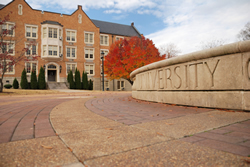
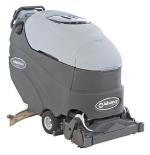
EWU boasts more than 10,000 students and many cleaning challenges. When asked to describe his toughest cleaning challenge, the custodial manager at EWU, Ray Godin, says “By far, our toughest cleaning problem is maintaining all of our carpets and a wide variety of hard-surface floors.” With approximately two million square feet of hard and soft flooring to maintain on a daily basis, Godin was searching for an alternative to using separate pieces of equipment for cleaning each type of flooring. He recently found a one machine solution in the Advance Adphibian™ extractor/scrubber that cleans both soft and hard surface floors.

Read the full case study to learn how the Adphibian successfully cleans and maintains a wide range of floor surfaces at a vibrant and crowded university campus.

Monday, March 5, 2012

The Goal of CRI

Now that we've discussed the testing program for CRI carpet extractor certification and its benefits, let's wrap up this blog post series by taking a look at the goal of CRI.

Established in 1991, CRI is a national carpet and rug industry trade organization headquartered in Dalton, Georgia. CRI counts as its members over 90 percent of all carpet producers and raw materials suppliers in the United States. In 2000, CRI established a Green Label vacuum certification program in response to an industry need for a common standard in environmental certification. CRI views standardization and certification as an important part of its mission, and certifies carpets, cushions and adhesives in addition to vacuums and extractors.

When evaluating carpet extractors, consider products that bear the CRI Seal of Approval. The environmental and cleaning performance of CRI-tested and approved extractors can help you save time and labor costs, increase the life of flooring and improve a facility’s indoor air quality.

Monday, February 27, 2012

The Advantages of CRI Certified Extractors: Longer Lasting Carpet

We have discussed how CRI-certified carpet extractors can help to improve a facility's indoor air quality and lower cleaning costs. Today, we finish our blog post series by discussing how these extractors can help facilities achieve Longer Lasting Carpet.

The soil in carpet is not only unsightly and unhealthy, it is also destructive. Carpet soil includes sharp and abrasive microscopic particles, which when walked on, cut into carpet fibers and abrade them. This ultimately causes the carpet to continuously appear dirty. Over time, the wear caused by soil will require replacement of the carpet sooner than would otherwise be necessary. Having CRI’s certification means an extractor is both able to effectively remove dust particles, as well as not adversely affect the carpet’s overall appearance. Additionally, a certified machine will effectively remove the water from the carpet, thus greatly reducing mold and bacteria growth. All this translates to a longer life for your carpet.

To learn more about Advance's CRI-certified carpet extractor solutions, visit: www.advance-us.com.


Monday, February 20, 2012

The Advantages of CRI Certified Extractors: Lowered Costs

This week's blog post continues our series on the advantages of CRI-certified carpet extractors for your facility and cleaning procedures. While last week touched on the benefits of Indoor Air Quality (IAQ), this week we will discuss how these extractors result in Lowered Costs.

According to industry-sponsored studies, as much as 95 percent of total cleaning costs are in labor. CRI-certified extractors are more effective at removing soil, dust and other compounds, which translates to greater cleaning efficiency and less time spent extracting. In addition, other studies have shown that improved IAQ helps reduce employee absenteeism and liability issues, which in turn contributes to cost reduction.

Next week, our blog post series will finish with how CRI-certified extractors result in Longer Lasting Carpet.

Monday, February 13, 2012

The Advantages of CRI Certified Extractors: Improved Indoor Air Quality

Our last few posts have discussed the Carpet and Rug Institute (CRI) Carpet Extractor Certification in detail, analyzing machine performance certification in various areas. Our next round of posts will look at what CRI certification really means for your facility and cleaning procedures. There are many ways an extractor with the CRI Seal of Approval can positively affect your company’s cleaning program, including: Improved Indoor Air Quality, Lowered Costs and Longer Lasting Carpet.

Indoor Air Quality (IAQ) is a measure of the quality of the air in an indoor environment. Good IAQ depends on many factors, including effective building design, up-to-date maintenance and the selection and use of “green” cleaning products. The U.S. Environmental Protection Agency has determined that improving IAQ can reduce health problems, improve worker productivity and improve the efficiency of cooling and ventilation systems. Dust, residual cleaning products and poor ventilation are all enemies of good IAQ. Commonly thought of solely as a nuisance, dust frequently contains pollen, fungal spores, dust mites and volatile organic compounds (VOCs) that can be harmful to health. A certified extractor will effectively improve IAQ by extracting the most soil during cleaning as possible. In addition, better removal of dust by extracting, reduces the amount of cleaning solutions needed.

Stay tuned for next week's segment discussing Lowered Costs!


Monday, January 30, 2012

CRI Testing Program – Water Containment


Last week’s blog post discussed machine certification for soil removal. This week, we will analyze the CRI testing program in terms of water containment.

Since moisture residue in carpet can cause any number of problems from mold to fostering bacteria growth, it is important that no excess water remain after the extractor finishes extracting an area. In this CRI test, a cut pile of carpet is weighed to determine its “dry” weight. The carpet sample is then given a set quantity of water. The extractor is allowed four passes over the sample to remove as much water as possible. After the extractor has finished, the carpet sample is weighed again to determine how much water remains. To receive certification, the machine can leave no more than eight ounces of water behind per square yard of carpet.

Stay tuned next week for the last component in the CRI testing program: carpet appearance retention.

Monday, January 23, 2012

CRI Testing Program - Soil Removal


Last week we discussed what CRI certification really means for carpet extractors. Over the next few weeks, we will analyze the three different areas that the CRI testing program certifies machine performance in. These include soil removal, water containment and carpet appearance retention.

The combination of foot traffic and dust settlement can lead to a large amount of soil buildup in carpet, requiring the need for soil removal. CRI’s soil removal test utilizes X-ray fluorescence (XRF) technology developed by NASA that analyzes the emission spectrum when an atom is excited. In the test, a patch of carpet receives a set amount of soil. The cleaning machine is then allowed to extract the carpet. After the machine is done cleaning, the XRF gun irradiates the carpet, and the soil left behind emits fluorescent X-ray radiation based on the energy characteristics of each element. Scientists then measure the intensities of the emitted energies to determine how much soil remains in the sample. If the extractor is able to remove 55-70 percent of the soil it receives bronze certification, 70-80 percent earns silver distinction and by removing 80 or more percent of the soil the extractor is rated with a gold certification for soil removal.

Check back next week for a discussion on the CRI testing program for water containment.

Monday, January 16, 2012

CRI Carpet Extractor Certification


When evaluating carpet extractors, cleaning professionals want equipment that gets the maximum soil out of the carpet and leaves the carpet as dry as possible. While manufacturers claim their products are efficient or effective, it can be difficult to validate these claims. However, that’s starting to change. The Carpet and Rug Institute (CRI), in conjunction with NASA, has a testing program that rates extractors for their ability to remove soil and water as well as their ability to preserve carpet appearance. An extractor with the CRI Seal of Approval means the extractor meets the highest standards in the industry for efficient and effective cleaning, as well as appearance retention. CRI’s scientific testing procedure provides the hard data you need to evaluate and compare carpet extractors.

A CRI Seal of Approval on an extractor tells purchasers that the machine meets specific standards for operation and performance. Equipment manufacturers voluntarily submit their extractor models for the Carpet and Rug Institute’s independent testing. An independent board of scientists reviews the test results and recommends whether to certify the machine.

Stay tuned for next week when we discuss machine performance certification in different areas.

Tuesday, December 27, 2011

University Cleaning


Last week we looked at one solution for outdoor cleaning. This week, we will discuss a cleaning solution used in university and educational facility cleaning applications. University facilities present a unique cleaning challenge due to their size and scope, in addition to the various types of flooring that require cleaning.

At Eastern Washington University (EWU) there are more than 10,000 students, which means a high quantity of classrooms and areas to clean. EWU has approximately two million square feet of hard and soft flooring to maintain on a daily basis. When asked to describe his toughest cleaning challenge, the custodial manager at EWU, Ray Godin, said, “By far, our toughest cleaning problem is maintaining all of our carpets and a wide variety of hard-surface floors.” Godin was searching for an alternative to using separate pieces of equipment for cleaning each type of flooring. He found the Advance Adphibian™ extractor/scrubber that cleans both soft and hard surface floors.

The Adphibian is designed to enable cleaning staff to use one machine to clean carpets and scrub hard floors, maximizing efficiency and flexibility. The Adphibian offers a quick 30-second tools-free changeover to let operators switch between using a full-functioning carpet extractor and a cylindrical scrubber.

For more information on this case study and to read other case studies, visit: http://www.advance-us.com/solutions/casestudies.aspx.


Monday, July 11, 2011

New ES4000 Total Carpet Care System from Advance Provides Complete Flexibility for Carpet Maintenance

The new ES4000 Total Carpet Care System delivers unprecedented versatility in a single convenient, controlled platform. Offering four distinct operational modes, the ES4000 can dry sweep, interim extract, pre-treat or restore carpets—providing a flexible solution for carpet care applications ranging from daily maintenance to deep restorative extraction.

The ES4000 allows users to efficiently switch between four different cleaning modes, providing the time-saving versatility to accommodate varying carpet care requirements:
  • Dry Sweep Mode utilizes dual brushes, vacuum suction, dust misting and two-stage filtration for complete dust containment, providing daily sweeping capabilities up to 35,000 square feet per hour.
  • Interim Mode provides the capability to extract up to 14,000 square feet of carpet in a singe pass in one hour, allowing for room turnaround in less than 30 minutes.
  • Pre-Treat Mode allows operators the flexibility to pre-treat up to 21,000 square feet of carpet per hour, or lay encapsulates, in a single pass while riding, increasing productivity.
  • Restorative Mode deep cleans heavy traffic areas where more attention is required, cleaning up to 7,000 square feet of carpet per hour.

The ES4000 Total Carpet Care System meets green cleaning equipment requirements with Carpet and Rug Institute Seal of Approval (CRI-SOA) certification. CRI-SOA certification proves equipment quality and cleaning effectiveness to protect and maintain a facility’s carpet life. With operation no louder than a person speaking, the ES4000 permits daytime cleaning without disturbing facility occupants. The ES4000 also adds to facility sustainability with onboard detergent metering, eliminating the need to pre-mix solution and reducing chemical costs and overall environmental impact.


To learn more about the ES4000, please visit http://www.nextcom.com/pressreleases/2054

Tuesday, July 5, 2011

Effective Cleaning for Floors With Carpet


Although many facilities present hard-floor surface cleaning applications, some facilities, such as offices and classrooms, require floor cleaning for carpets as well. Carpets are often more difficult to maintain and require additional equipment and detergents.

To satisfy floor cleaning requirements for both hard-floor surfaces and carpeted floors—without purchasing multiple pieces of equipment—facility owners can employ a multi-function machine, such as a combination scrubber-extractor, to complete all floor cleaning jobs.

This eliminates the need to buy a separate machine for extracting carpets and reduces the number of times staff has to return to the supply closet to change machines. Multi-function machines help improve cleaning efficiency by minimizing labor and costs.


Tuesday, May 31, 2011

Improve Indoor Air Quality with Green Floor Cleaning Equipment

Floor cleaning equipment with green cleaning capabilities can contribute directly to indoor air quality/indoor environment quality (IAQ/IEQ). Facility owners can employ floor cleaning vacuums, carpet extractors and scrubbers with sealed gel batteries:

Vacuum Cleaners: The LEED-EB (Leadership for Energy and Environmental Design for Existing Buildings) requirements specify that vacuum cleaners are capable of capturing 96% of particulates 0.3 microns in size and meet the requirements of the Carpet & Rug Institute Seal of Approval Program. CRI-certified vacuums release no more than 100 micrograms of dust particles per cubic meter into the surrounding air.

Carpet Extractors: Carpet extractors with green cleaning capabilities significantly reduce drying time and help prevent mold. They also minimize the use of water and detergent while cleaning. Per LEED-EBOM, carpet extractors should be CRI-Seal of Approval certified.

Sealed Gel Batteries: Automatic scrubbers that meet green cleaning requirements utilize environmentally-preferable gel batteries or maintenance-free AGM batteries. These batteries are completely sealed to eliminate acid spills that can occur with wet-acid batteries. This design also minimizes vapor emissions during charging, and, if equipped with an on-board charger, allow non-hazardous charging anywhere in a facility.

With the above types of green floor cleaning equipment, facility owners can ensure they are complying with green cleaning standards, while maximizing cleaning efficiency.